
Electricity prices are increasing every year․ For millions of homes‚ businesses‚ and industries across India‚ the best long-term solution is a solar power system․ There is one thing that will make all the difference between a good decision and a costly mistake before you install or purchase a solar system‚ and that is understanding what goes inside a solar power system․
Most people think of solar energy as just a few solar panels on the roof of a house․ A solar power system actually consists of many different pieces of equipment that work together to generate‚ convert‚ protect‚ and deliver electricity to your home or business․
In the end‚ it’s the quality of these components that determines how much energy your system generates‚ how long it lasts‚ and how much money you’ll save on your electric bill over the next quarter century․
In this blog, we will break down all the Major Components of the Solar System – what each one does, why it matters, and what to look for when evaluating a solar installation.
What Are the Major Components of a Solar Power System?
A solar power system is more than a bunch of panels on the roof‚ it is a carefully designed set of components which function efficiently and reliably․ Each of these components has essential functions related to energy generation‚ safety and lifetime․
Here are the major components of solar panel system –
1. Solar Panels
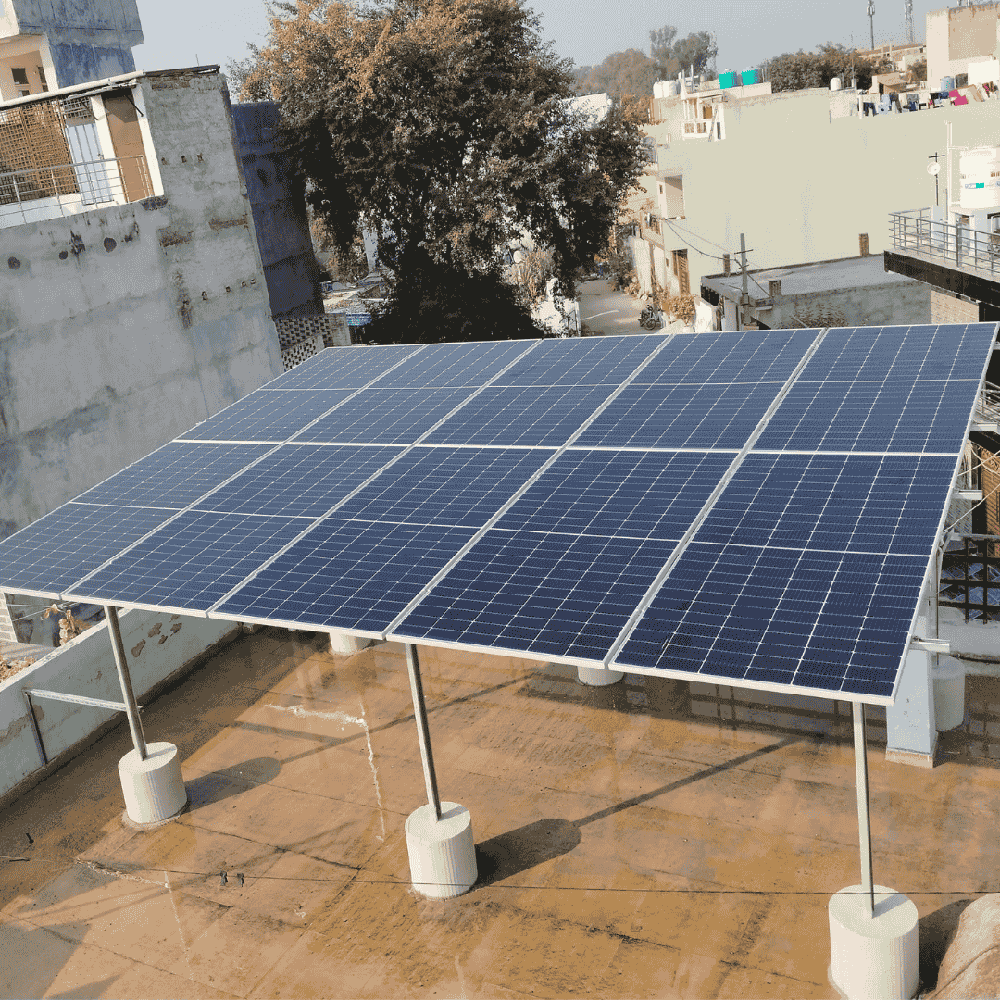
Solar panels are the most observable and fundamental part of any solar panel system. They are made up of photovoltaic (PV) cells that absorb sunlight and convert it directly into direct current (DC) electricity through a process called the photovoltaic effect.
Types of Solar Panels:
- Monocrystalline Panels – highest efficiency, longer lifespan and best for limited rooftop space.
- Polycrystalline Panels – lower efficiency, more affordable and best for large spaces.
- Thin-film – flexible, used in special applications.
- TOPCon & Bi-Facial Panels – latest technology, generate electricity from both sides, ideal for premium installation.
Internal components of solar panel –
What to look for :
Always choose Tier-1, MNRE-Approved solar panels with a minimum 25-year performance warranty.
2. Solar Inverter
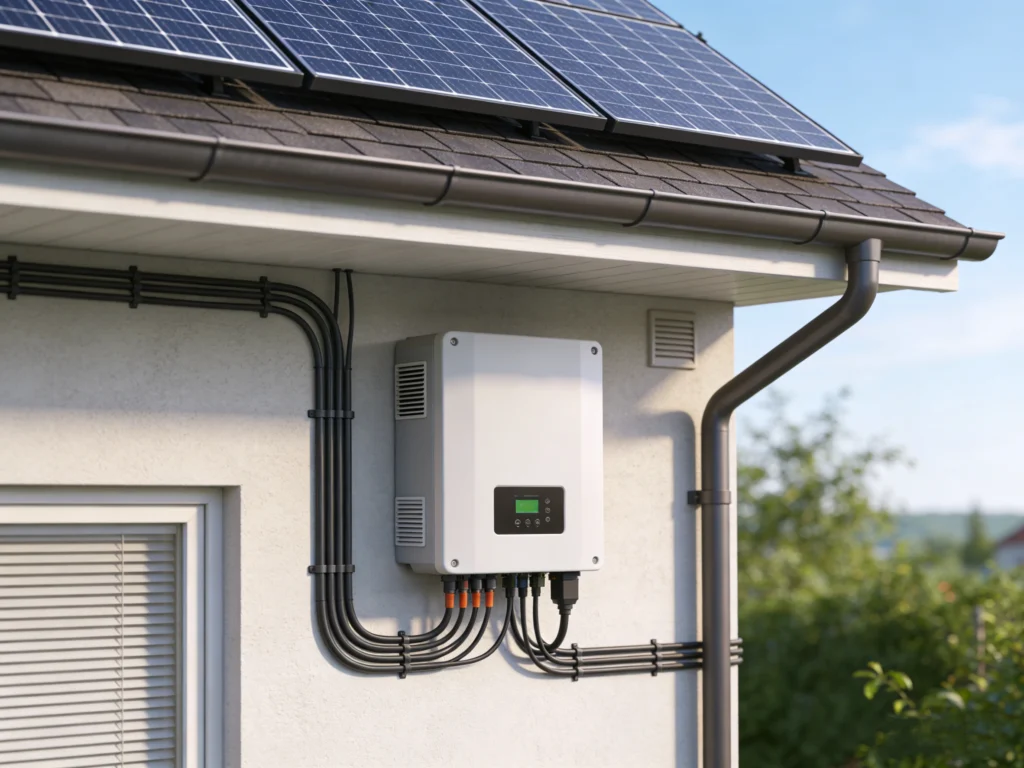
Inverters are the most critical component after the panels. Its job is to convert the DC electricity generated by the solar panels into Alternating Current (AC) Electricity, which is what your home appliances and electrical equipment actually run on.
Types of Inverters :
| Type | Description | Best For |
| String Inverter | Single inverter for entire panel array; most common and cost-effective | Uniform roofs without shading |
| Microinverters | Small inverter under each panel; optimizes each panel independently | Shaded roofs or complex angles |
| Hybrid Inverter | Combines inverter + battery charging; works with storage systems | Homes adding batteries later |
| Battery Inverter | Dedicated to managing battery charge/discharge | Off-grid or backup systems |
What to look for :
Choose inverters from recognized brands with a minimum 5-year warranty, remote monitoring capability, and grid protection features built in.
3. Mounting Structure
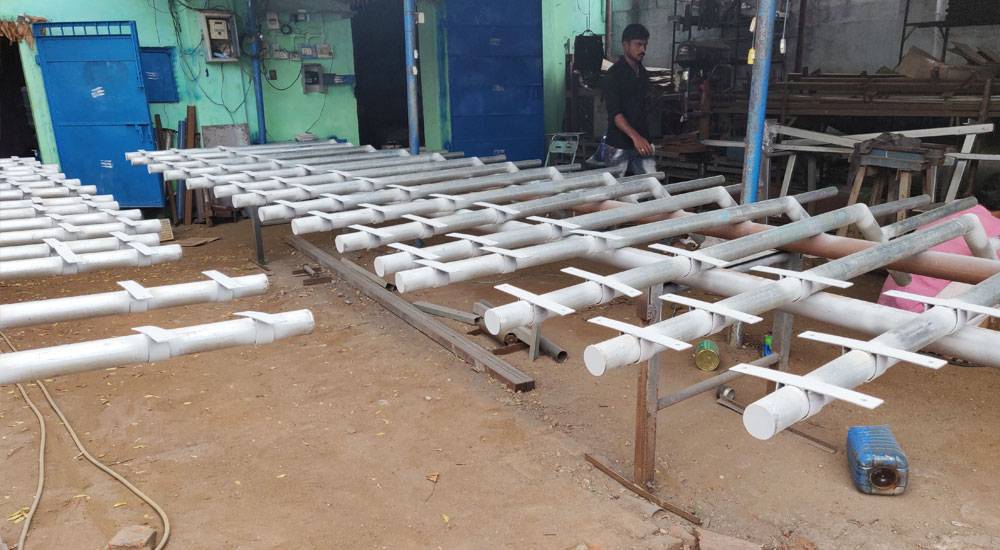
The mounting structure is the framework that holds your solar panels securely in place on your rooftop or ground. It may seem like a minor component but it is what protects your entire solar panel system from wind, rain, etc. it positions solar panels at optimal angle and orientation for maximum sunlight.
Types of Mounting Structure :
| Type | Installation | Characteristics |
| Roof-Mounted | Attached to roof rafters with flashing | Most common for homes; saves space |
| Ground-Mounted | Fixed to ground-mounted posts | Flexible placement; easier maintenance |
| Pole Mounted | Mounted on poles | Can be fixed or tracking |
| Solar Trackers | Motorized systems that follow sun | 25-35% more energy; expensive |
What to look for :
Always look for hot-dipped galvanized steel or anodized aluminium mounting structures. They are usually Corrosion, Wind and Cyclone Resistant – designed for the building’s Load Requirements.
4. DC Cables & AC Cables
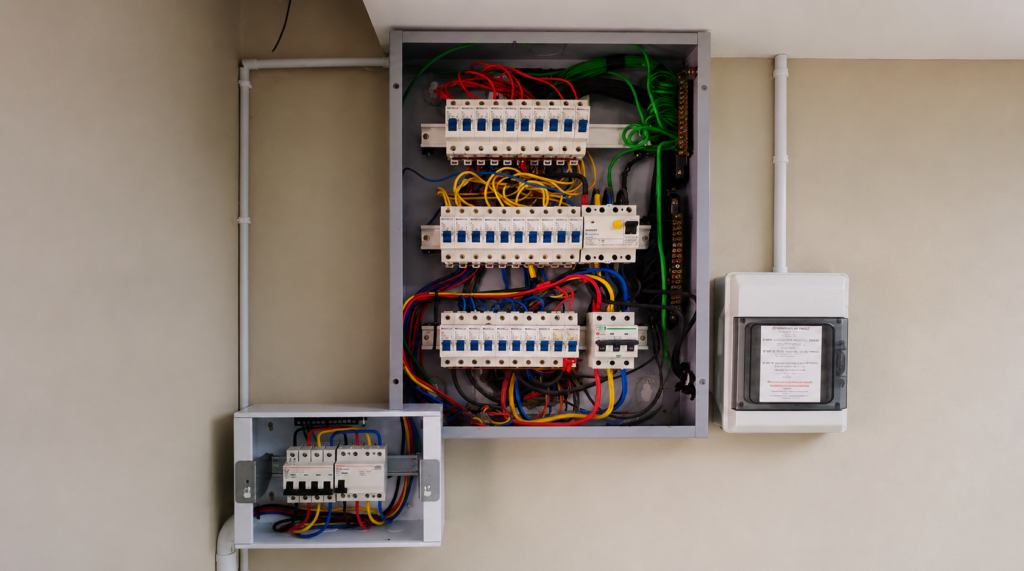
Cables are the invisible backbone of your solar system. DC cables carry electricity from solar panels to the inverter, while AC cables carry the converted electricity from the inverter to your home’s electrical distribution board.
DC Cable Functions :
| Function | Description |
| Power Transmission | Carry DC electricity from solar panels to inverter |
| High Voltage Handling | Manage 600V–1500V DC safely with double insulation |
| Polarity Maintenance | Maintain correct positive (+) and negative (−) connections |
| Weather Protection | Resist UV, moisture, and abrasion for outdoor durability |
| Safety Protection | Prevent electrical faults and short circuits with specialized insulation |
AC Cable Functions :
| Function | Description |
| Power Transmission | Carry AC electricity from inverter to home/grid |
| Standard Voltage Distribution | Distribute 230V (single-phase) or 400V (three-phase) power |
| Household Integration | Connect to standard electrical panels and appliances |
| Grid Connection | Enable electricity export to or import from utility grid |
| Three-Phase Support | Handle three-phase power for commercial/industrial systems |
What to look for :
Always insist on UV resistant, weather-proof and flame-retardant solar-grade cables. Poor cables are one of the leading causes for short circuits and fire hazards in solar installation.
5. Earthing & Lightning Arrestor
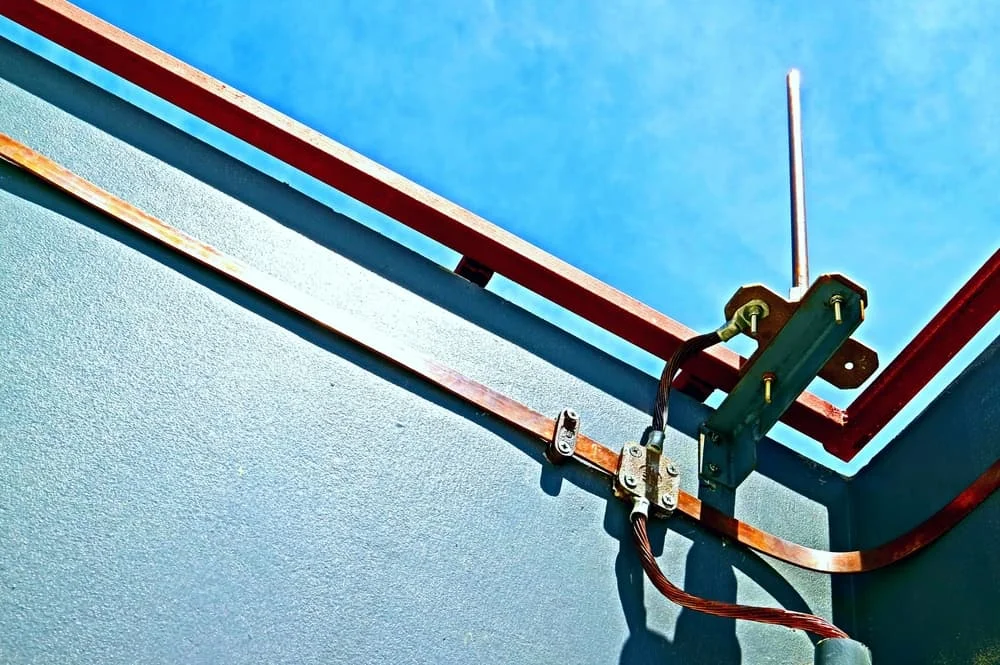
Earthing ensures that any fault current in the solar system is safely dissipated in the ground, protecting both equipment and people around it.
A lightning Arrestor provides an extra layer of protection by safely diverting lightning strikes away from the system, reducing the risk of equipment damage.
Types of Lightning Arrestors:
| Type | Application |
| DC Lightning Arrestor | Protects positive/negative DC lines from panels |
| AC Lightning Arrestor | Protects AC lines from inverter to grid/load |
| Combined DC/AC Arrestor | Protects both DC and AC sides simultaneously |
What to look for:
Proper Earthing as per IS 3043 standards and a certified lightning protection is non-negotiable in Solar Rooftop Installation.
6. Net Meter
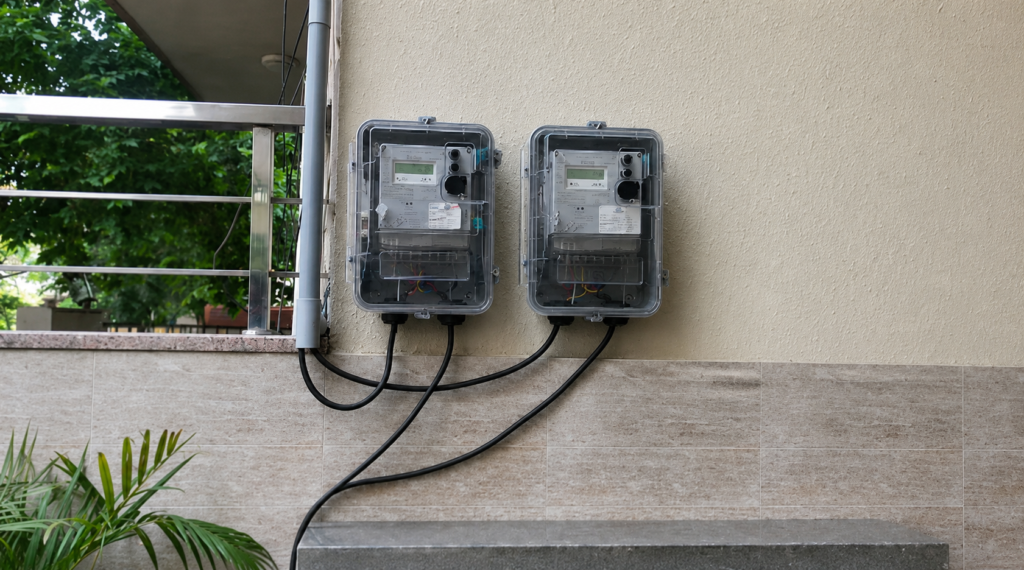
A Net Meter is a bidirectional electric meter that tracks both the electricity consumed from the grid and the excess electricity generated by your Solar system that is sent back to your Grid, enabling utility credits.
It is an essential component of the solar energy ecosystem, designed to measure and manage the flow of electricity between residential or commercial solar systems and the utility grid. Net Metering is what allows you to earn credits for surplus solar energy and majorly reduce your electricity bill cost.
How Net Metering Works :
What to look for:
Your solar company should handle the complete net metering application process with your local DISCOM on your behalf – including documentation, inspection coordination, and meter installation follow-up.
7. Monitoring system
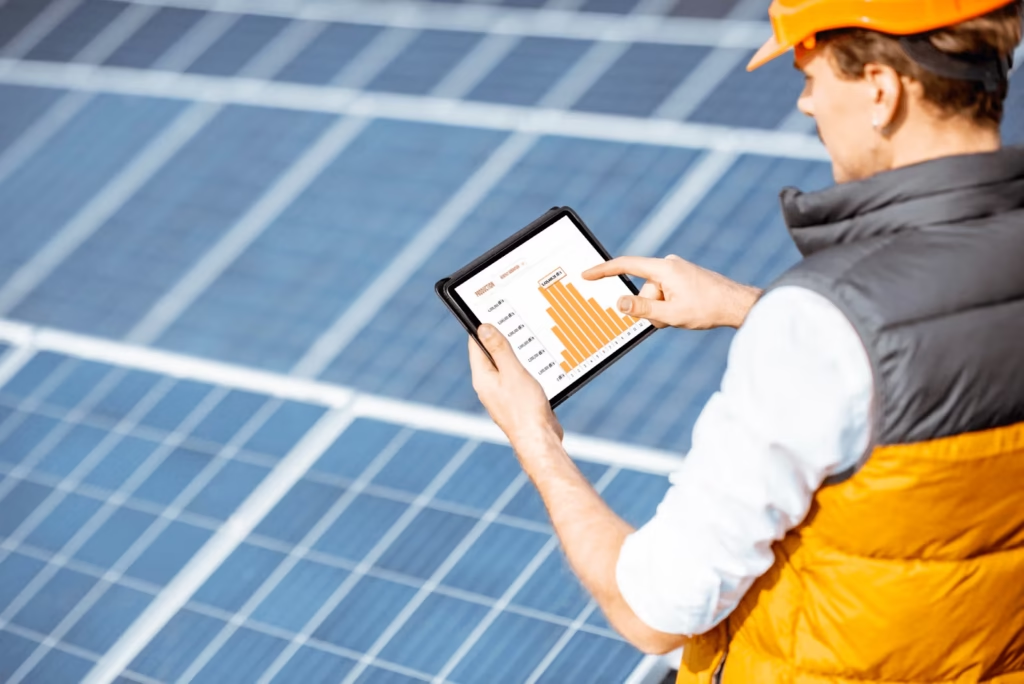
A Monitoring System allows you to monitor your Solar System’s real-time Performance – energy production, system health, consumption and alerts, allowing you to evaluate how well your solar panel system is operating ,all from your smartphone or computer.
Without monitoring, you will never know whether your system is underperforming due to shading, soiling, or a technical fault, which can result in losing your savings without even realising it.
What Solar Monitoring Systems Track :
What to look for:
Choose a solar company that provides an IoT-based remote monitoring modem with a dedicated mobile app, real-time alerts, and historical performance data so you always stay in control of your investment .
Conclusion
The components that make up a solar energy system impact both how much energy you will produce‚ how safe the system will be‚ and how much you will save on electricity over the next 25 years․
Now that you understand the different components that make up a solar panel system‚ you’re equipped to speak with solar vendors‚ review quotes‚ and feel good about your decision․
But the right knowledge needs the right partner to back it up.
All Novarise Energy systems have IEC certified Tier-1 components‚ qualified installation engineers‚ and dedicated AMC support to ensure maximum returns on your solar energy system for decades to come․
Frequently Asked Questions
Major Components of a Solar Panel System: Complete Guide
Why is earthing important in a solar installation?
Earthing protects people and equipment from electrical faults by safely directing excess current into the ground. It also reduces the risk of electrical shocks and equipment damage.
How long do solar system components last?
Most solar panels have a lifespan of 25–30 years. Inverters typically last 8–15 years, while mounting structures, cables, and protection systems can last over 25 years with proper installation and maintenance.
What does a solar inverter do?
A solar inverter converts the direct current (DC) electricity generated by solar panels into alternating current (AC) electricity, which is used by household appliances and electrical equipment.
Which component is the most important in a solar power system?
Solar panels and the solar inverter are considered the most important components. Solar panels generate electricity, while the inverter converts it into usable power for homes and businesses.
What are the main components of a solar power system?
The main components of a solar power system are solar panels, solar inverter, mounting structure, DC and AC cables, earthing system, lightning arrestor, net meter, and monitoring system. Together, these components generate, convert, distribute, and monitor solar energy.