
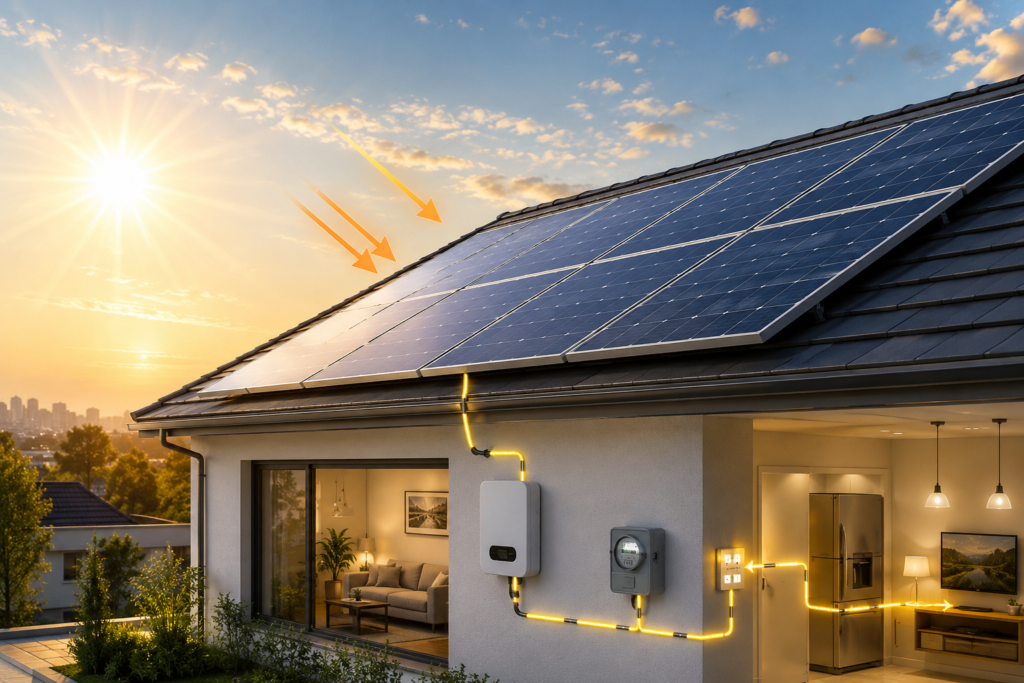
You know what the components of a solar panel system are — if not then check out our latest blog on – major components of the solar system. but here is the question most people next ask: how do all these components actually work together to power my home?
Understanding how a solar power system works is not only interesting‚ it’s a useful tool that helps you monitor your solar power system better‚ diagnose issues faster‚ and get the most out of your investment․
A solar power system is basically a production line that takes what falls on one end in the shape of solar irradiance and converts it at the other end into electricity․ So everything in that production line has to be there for a reason‚ and when it all works to perfection it will give you a regular and essentially free supply of electricity for 25 years or more․
Here’s what you can expect to learn‚ all the way from sunlight hitting your panels‚ to it coming into your home‚ powering your appliances‚ and ultimately reducing the cost of your electric bill․
How Does a Solar Panel System Work — The Basic Principle
A solar power system works on a simple scientific principle called the photovoltaic effect, the ability of certain materials to convert sunlight directly into electricity.
When sunlight hits your solar panels‚ the energy from the sunlight causes electrons in the solar panels’ photovoltaic (or PV) cells to be knocked free from their atoms‚ starting a flow of electricity․ This direct current (DC) electricity travels through your home in a series of steps‚ where it is processed‚ converted‚ and then delivered as usable alternating current (AC) electricity․
The entire process happens automatically and continuously, every single day from sunrise to sunset without any fuel, moving parts, or manual intervention.
How Solar Panel Components Work Together — Step by Step
Here is the complete energy flow of a solar power system explained step by step .
Step 1 – Solar Panels Capture Sunlight and Generate DC Electricity
When sunlight strikes your solar panels on the rooftop the photovoltaic cells inside them convert the energy from the sun into direct current (DC) electricity․ The amount of electricity generated at this stage depends on the conversion efficiency of your panels‚ the intensity of the incoming sunlight and whether there are shading or soiling issues․
That’s why high quality solar panels‚ especially well-placed solar panels‚ are so important; they’re the beginning of the whole energy chain․
Step 2 – DC Electricity Flows Through DC Cables into the DCDB
The DC output of the panels is carried down using UV resistant solar grade DC cables to the DCDB․ The DCDB is the first point of protection in the system․ It filters the DC current entering the system and protects it from reverse current flow and voltage surges before passing it on to the rest of the system․
It’s easy to forget about it‚ but a properly rated DCDB is vital․ One transient can take out your inverter and panels․
Step 3 – The Solar Inverter Converts DC to AC Electricity
Once filtered through the DCDB‚ the supply of DC electricity from the solar modules is fed into the solar inverter to convert it into AC electricity‚ which is the most meaningful function of the inverter․ Much of this power is supplied to home appliances,office equipment and industrial machinery.
Modern inverters don’t just convert current: they control the performance of your system‚ manage the flow between your solar system and the grid (or your battery in the case of hybrid systems) and report back to your remote monitoring system․
The inverter is the most complex part of your solar panel system, and its quality directly impacts your system’s overall efficiency and reliability.
Step 4 – AC Electricity Powers Your Property
From the ACDB (AC Distribution Box)‚ the energy flows through your property main electrical distribution board to all your lights‚ fans‚ air conditioners‚ computers and all your industrial loads‚ just like power from the grid‚ but at virtually no cost․
During peak sunlight hours, your solar system can power your entire property independently – without drawing a single unit from the grid.
Step 5 – Surplus Energy is Exported to the Grid via Net Meter
When your solar system generates more electricity than you are currently consuming, which happens regularly during midday hours, the surplus energy does not go to waste. It is automatically exported to the electricity grid through your bidirectional net meter.
Your DISCOM records this export and credits it against your future electricity consumption. This is net metering and it is what allows many solar users to bring their monthly electricity bill down to near zero.
Step 6 – The Monitoring System Tracks Performance in Real Time
In the meantime‚ your IoT-based remote monitoring system is capturing all of the data point – how much electricity your panels are generating‚ how much your property is consuming‚ what the export is to the grid‚ and whether the system components are functioning correctly․
If the system is underperforming due to shading, soiling, a technical fault or a component losing efficiency, the monitoring system sends an immediate alert to your smartphone, so the issue can be addressed before it starts affecting your savings.
Step 7 — Earthing and Lightning Protection Runs Silently in the Background
While all of the above is happening, Your earthing system and lightning arrestor‚ are quietly and efficiently making sure that any incoming fault current‚ over-voltage or lightning strike is safely dissipated to ground‚ so that it does not adversely affect your equipment‚ or pose a threat to people on the property․
The protective layer is invisible when things are working well‚ but it is essential when something goes wrong․
What Happens to Excess Solar Energy?
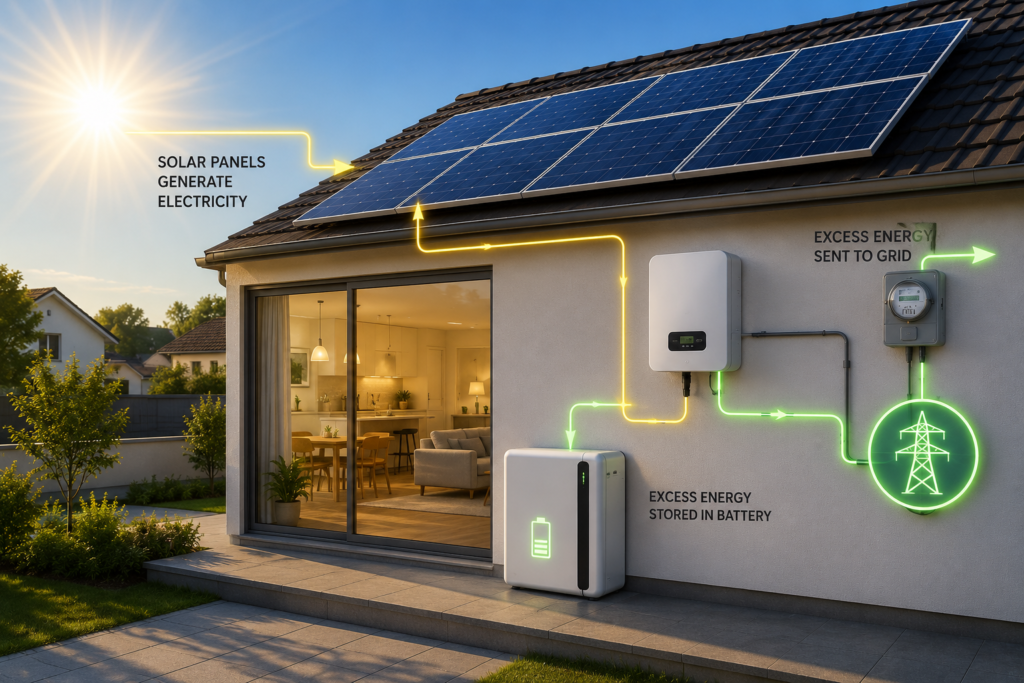
This is one of the most common questions for first-time solar buyers‚ and the answer is fairly straightforward․
During other months when your solar system is producing more electricity than you consume‚ the excess energy is exported to the grid via the net meter installed at your premises․ Your local electricity distribution company (DISCOM) keeps a record of the exported electricity and adjusts your monthly bill by giving you credits for the net energy exported․
This can occur when your solar system is producing and you are not home to use that generated power (e․g․‚ during working hours with the house unoccupied‚ or on weekends with an industrial unit that may or may not be present)․
In a hybrid solar system with battery storage‚ excess energy produced during the day is stored in the battery for use in the evening‚ or during a power outage․ This gives you the double benefit of energy independence and energy cost savings․
Conclusion
A solar power system is a carefully engineered system, from the moment that the sun’s rays hit your solar panels until the moment that that clean energy is used to power your home‚ or your business‚ every part of the system is designed to make sure that the project will perform safely‚ efficiently and profitably for the next quarter-century․
Knowing how these components work together will also put you in a better position as a buyer‚ because you will know what to demand from your solar company before you sign on․
At Novarise energy, every solar system is designed and installed with industrial-grade components, engineering precision, and a structured 5-step project process — ensuring that every link in your solar chain is built to last.
Frequently Asked Questions
How All Solar Panel Components Work Together
Can a solar system work without all its components?
No. Every component in a solar system serves a specific and critical function. Removing or compromising on any single component — whether it is the DCDB, earthing, or monitoring system — affects the safety, performance, and longevity of the entire installation.
How does net metering work in a solar system?
Net metering allows you to export surplus solar energy to the grid and receive bill credits in return. Your bidirectional net meter records both the electricity you consume from the grid and the electricity you export — and your bill reflects only the net difference.
How does a solar inverter work?
A solar inverter converts direct current (DC) electricity generated by your solar panels into alternating current (AC) electricity that can be used by your home appliances and electrical equipment.
What happens to excess solar energy?
Excess solar energy is exported to the electricity grid through your net meter. Your DISCOM credits this export against your future consumption, reducing your monthly electricity bill. In hybrid systems, excess energy is first stored in batteries before being exported.
How does a solar panel system work?
A solar panel system works by converting sunlight into DC electricity through photovoltaic cells, converting it into AC electricity via an inverter, and supplying it directly to your home or business — with surplus energy exported to the grid through a net meter.